If you have ever leaned three inches away from a ten-times magnifying mirror under harsh bathroom lighting and squeezed tiny grayish-tan dots along the sides of your nose, congratulations, you have officially waged war on your own sebaceous filaments while mistaking them for blackheads. In the treatment room, explaining the anatomical difference between true open comedones and completely normal sebaceous filaments is easily one of the biggest eye-openers for clients. Knowing which one is in your pores can save your nose from broken capillaries, enlarged pore openings, and endless frustration.
What Sebaceous Filaments Actually Are Inside Healthy Pores
Every human being with functioning oil glands has sebaceous filaments, no matter how expensive their skincare routine is. Picture a tiny, hair-thin wick made of triglycerides, squalene, wax esters, and microscopic dead corneocytes lining the inside wall of a healthy sebaceous follicle. That tubular lining serves a vital physiological purpose: it acts like a capillary channel that guides liquid sebum smoothly upward from the sebaceous gland to the surface of your skin, keeping your lipid barrier supple, lubricated, and protected against environmental dehydration.
Because the nose, chin, and central forehead naturally contain the highest concentration of active sebaceous glands on the body, those tiny tubular channels are simply more visible there. When the top tip of a sebaceous filament reaches the surface opening and meets ambient oxygen, it oxidizes slightly into a uniform pinpoint dot that looks pale gray, light tan, or yellowish. If you squeeze one, a thin, thread-like strand of soft oil emerges, and within twenty-four to forty-eight hours, your oil gland refills that exact channel because it is supposed to.
How True Blackheads Differ Anatomically
A true blackhead, clinically known as an open comedone, is an actual follicular blockage rather than a normal anatomical structure. Blackheads form when abnormal keratinization causes sticky dead skin cells to clump together with thick, sluggish sebum inside the pore opening, creating a firm, solid plug that stretches the follicle wall outward.
Unlike sebaceous filaments, which appear uniform in size and evenly spaced across the nose like tiny pinpricks, open comedones look darker, often deep charcoal or black due to dense melanin and lipid oxidation, feel slightly raised or bumpy to the touch, and appear randomly scattered across the cheeks, jawline, forehead, or outer ear. When extracted properly, a blackhead releases a solid, waxy plug rather than a soft, thread-like filament.
Why Squeezing Your Nose Causes Permanent Pore Damage
Attacking sebaceous filaments with fingernails, bobby pins, or aggressive pore strips is one of the quickest ways to damage delicate nasal skin. The skin across the bridge and sides of your nose is thin, tightly stretched over cartilage, and rich in fragile superficial capillaries. Applying heavy downward pressure crushes delicate blood vessels, leaving behind permanent red spider veins known as telangiectasias that require vascular laser treatments to erase.
Worse yet, repeatedly stretching and traumatizing the pore rim weakens surrounding collagen and elastin fibers, causing the pore opening to gape wider permanently. And because sebaceous filaments are a normal part of healthy sebum transport, squeezing them only triggers a temporary rebound surge in oil production without permanently eliminating them.
How Clinical Extractions and Acids Refine Pore Appearance
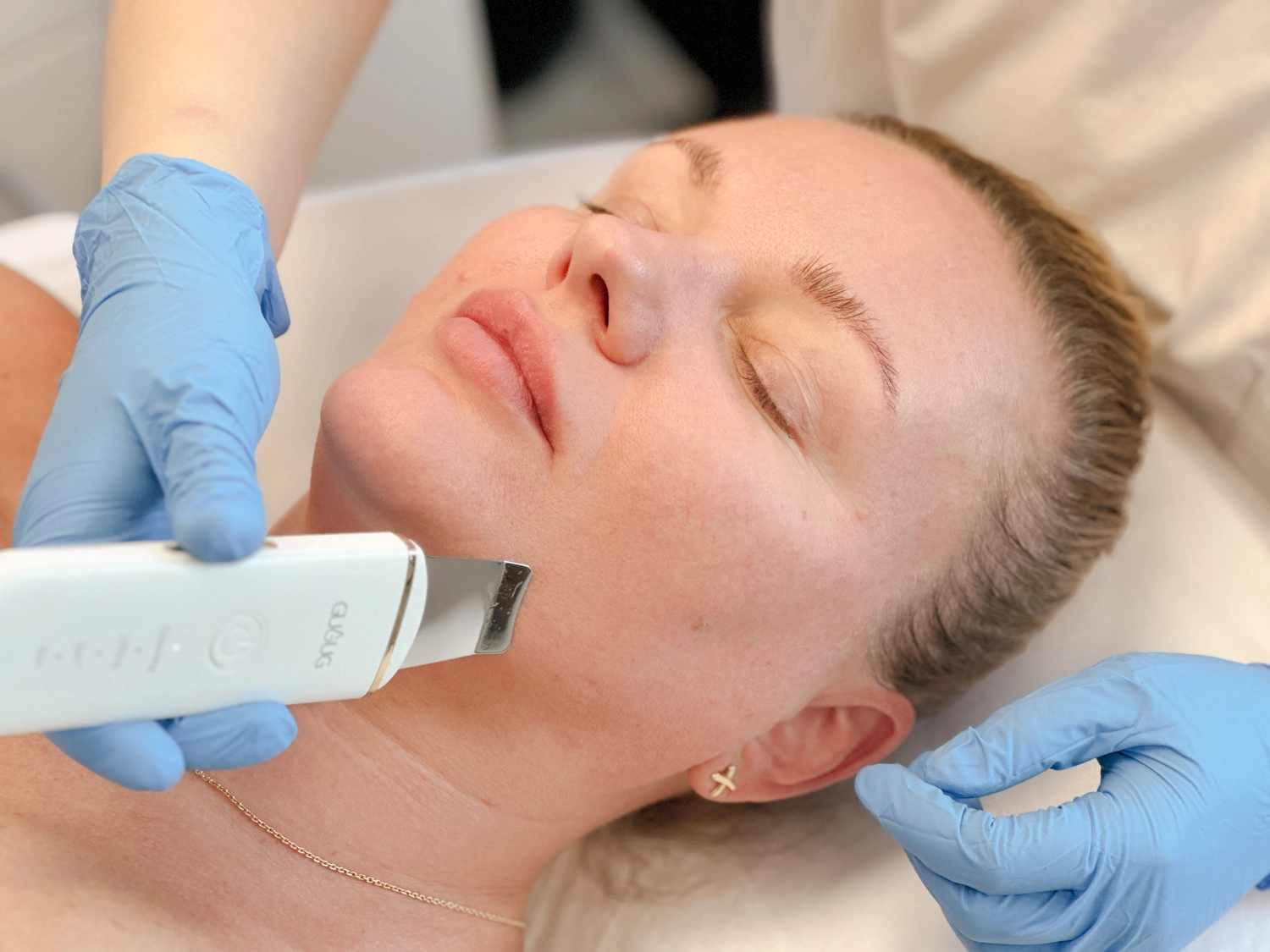
While you cannot, and should not, permanently erase sebaceous filaments, you can keep them clean, refined, and virtually invisible to the naked eye through smart keratolytic skincare and gentle clinical maintenance. Booking a professional Deep Cleansing Facial in Edmonton lets a licensed aesthetician soften compacted sebum with enzymatic steam, ultrasonic skin scrubbers, and oil-soluble beta-hydroxy acids before performing sterile, low-pressure extractions where open comedones exist.
Ultrasonic cavitation spatulas are particularly brilliant for sebaceous filaments: vibrating at roughly 28,000 hertz per second against damp skin, the flat metal blade gently lifts oxidized surface oil out of pore openings using high-frequency water waves without pinching or bruising delicate nasal tissue.
Daily Ingredients That Keep Pores Clear Between Facials
At home, keeping both sebaceous filaments and blackheads under control comes down to regulating oil viscosity and encouraging steady cell turnover. Incorporating a gentle leave-on two percent salicylic acid (BHA) liquid two to three evenings per week dissolves excess sebum inside the follicle lining before it oxidizes dark at the surface.
Pairing BHA with niacinamide helps regulate overall sebum output while strengthening pore walls, and adding a lightweight evening retinoid encourages orderly keratinocyte shedding so dead cells never clump into true blackheads in the first place. Always follow with a lightweight, non-comedogenic gel moisturizer so dehydrated skin does not overcompensate with extra oil.
Stop Fighting Normal Skin Anatomy and Start Refining It
The next time you catch yourself leaning inches away from a magnifying mirror, step back three feet, the exact distance at which real human beings actually interact with your face. Sebaceous filaments show your skin’s natural lubrication system is healthy and active, while true blackheads respond best to gentle acid exfoliation and skilled clinical extractions rather than bathroom-mirror battles. Schedule a customized deep-cleansing skin session today to clear congestion safely and leave your pores looking smooth, balanced, and refined.